Cold-Water Coral vs Tropical Reefs: How Britain's Deep-Sea Reefs Differ
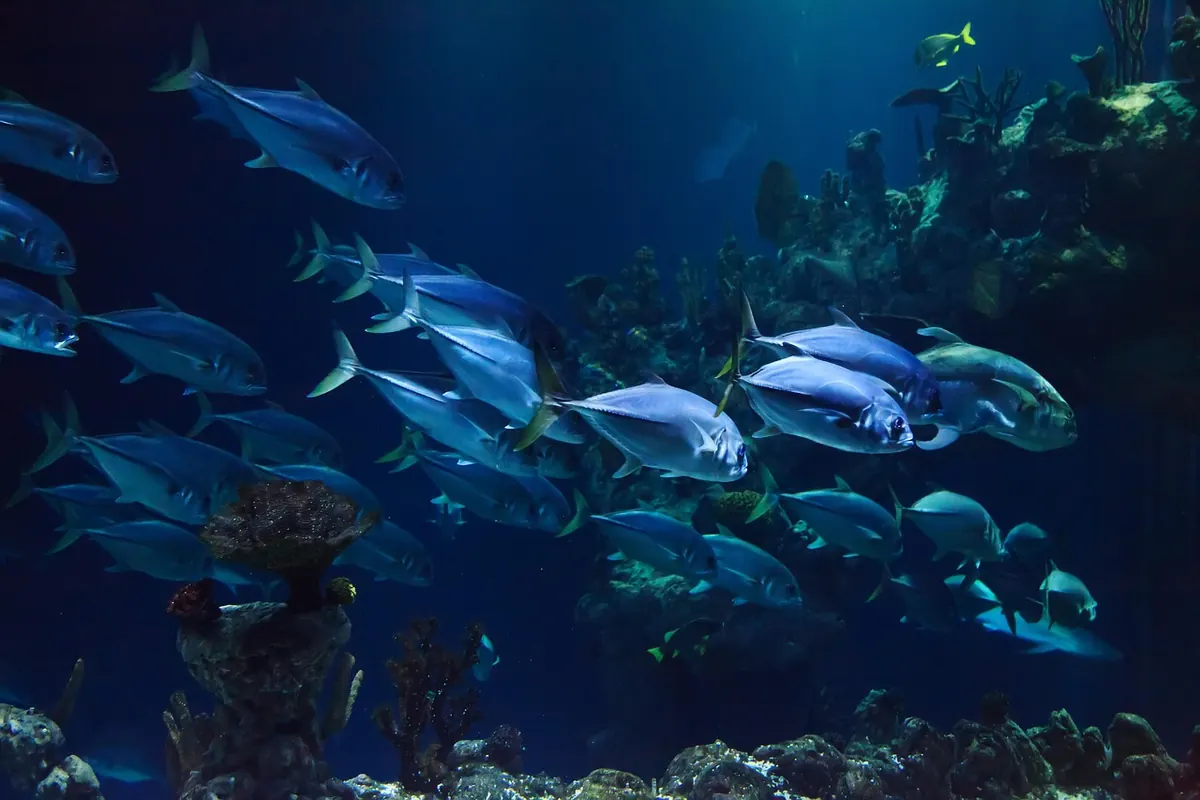
Take a boat west of Barra and lower a camera a hundred-odd metres to the seabed. In the dark, in water hovering near 9°C, you will find coral. Not an odd colony clinging on, but a reef: mounds and thickets of pale, branching coral, brittle stars draped across them, redfish hanging in the current.
Britain and Ireland sit beside some of the best-studied cold-water coral grounds anywhere. Mingulay, Rockall and Hatton Banks, the Porcupine Seabight, the Darwin Mounds, and a handful of west Highland sea lochs all hold reefs built by corals that never see the sun. They are reefs in every sense of the word — just assembled under a completely different set of rules from the tropical ones most of us picture when we hear the word "coral".
Built Without Sunlight
The biggest single difference is what feeds the coral. Tropical reef-building corals are colonial animals that farm symbiotic algae, known as zooxanthellae, inside their tissues. The algae photosynthesise and hand over most of the coral's energy; in return the coral gives them shelter and access to its waste nutrients. That partnership is precisely why tropical reef builders are restricted to clear, sunlit water.
Cold-water corals have no such arrangement. Lophelia pertusa — now usually listed as Desmophyllum pertusum — and its relatives are working animals. They catch plankton and organic particles from passing currents with their tentacles, which means they are not tied to sunlight at all. They can live in the dark, in cold water, and at depth.
Depth, Temperature and Current
Tropical reefs and cold-water reefs sit at opposite ends of the ocean's physical range. Broadly speaking:
- Temperature. Tropical reef-building corals generally need water warmer than about 18°C and do best in the mid-20s. Cold-water species such as Lophelia are comfortable between roughly 4°C and 12°C.
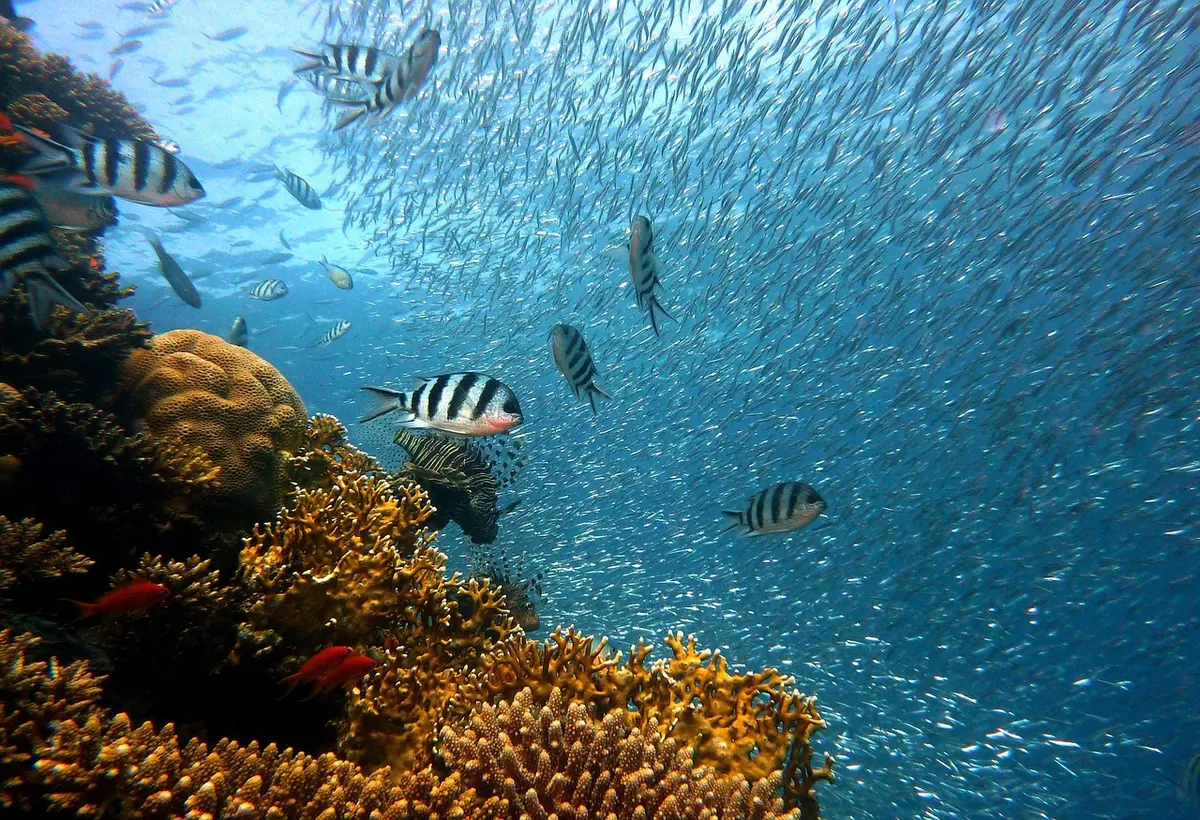
- Depth and light. Tropical reefs occupy the top few metres down to about 30 m, in water clear enough for photosynthesis. Cold-water reefs usually form between about 50 m and 1,000 m, though in some Norwegian and Scottish fjords they grow much shallower.
- Energy source. Tropical corals draw most of their energy from their algal partners; cold-water corals rely entirely on what the current delivers.
- Setting. Both need hard seabed to settle on and steady currents to bring food and carry away silt. Cold-water reefs tend to grow on rock ridges, boulder slopes, seamount flanks and the edges of channels scoured by tidal currents.
That last point explains a great deal about where cold-water coral turns up around Britain. The reefs sit where strong currents squeeze past topography — the shelf edge west of Scotland, the banks and channels of the Rockall Trough, and the narrow sounds of the Hebrides.
A Different Cast of Species
The species lists barely overlap. Tropical reefs are built mainly by stony corals with algal partners — Acropora, Porites, Montipora and many others — and the framework is cemented together by coralline algae. In UK and Irish waters the framework builders are a far smaller group: Lophelia pertusa, Madrepora oculata and Desmophyllum dianthus, supported by soft corals, sea pens, black corals and gorgonians such as the bubblegum coral, Paragorgia arborea.
What grows on and around them differs too. A cold-water reef is better described as a thicket or a garden than a wall of coral. Sponges, bryozoans, anemones, brittlestars, brisingid starfish and squat lobsters crowd the living branches, while the dead skeleton underneath provides galleries and crevices for fish including redfish, ling, tusk and saithe. People who have worked on both often describe tropical reefs as busy and brightly lit, and cold-water reefs as quieter but stranger — a landscape of pale branches, filter feeders and very slow movement.
Growth Rates, Age and Recovery
This is where the two systems part company most dramatically. Tropical branching corals can extend by several centimetres a year, and some species manage 10 cm or more. A reef damaged by a storm or a bleaching event can recover within a decade or two if conditions allow.
Cold-water corals are slow. Lophelia typically adds only a few millimetres to a couple of centimetres of skeleton per year. A mound a few metres high may have been growing for thousands of years, with living coral confined to the outer surface and centuries of dead framework beneath. There are two consequences. First, damaged cold-water reefs do not bounce back on human timescales; recovery is measured in centuries. Second, the dead skeleton is not waste — it is the structure everything else lives in. Remove it with a trawl and you remove the reef itself.
Biodiversity in Two Very Different Keys
Tropical reefs hold the highest marine biodiversity of any habitat, and it is not a close contest. Coral reefs cover a tiny fraction of the seabed while supporting a huge share of known marine species.
Cold-water reefs cannot match that count, but they are far from barren. Surveys of Lophelia reefs in the northeast Atlantic have recorded hundreds of associated species, and the reefs act as nursery and feeding grounds for commercially important fish. For fisheries and for deep-sea ecology they matter far more than their modest species totals suggest. They are also still being found: much of the seabed west of Scotland and Ireland has been mapped with multibeam sonar and surveyed with towed cameras, and new reef patches continue to appear.
Seeing Them for Yourself
You do not need a research vessel to get closer to cold-water coral. Practical options:
- Watch the survey footage. National marine agencies and research institutes publish ROV video and images from Scottish and Irish deep-water sites. An