10 Common Mistakes New Divers Make Around Coral (and How to Avoid Them)

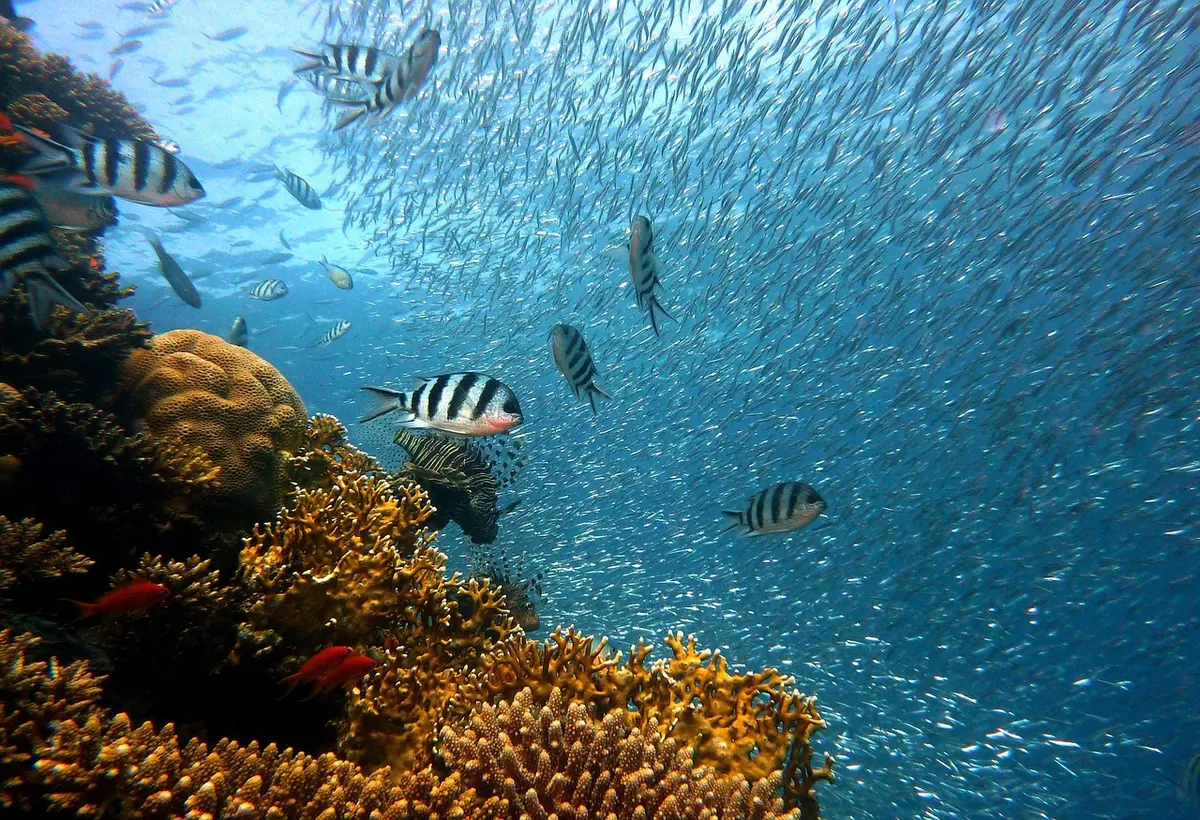
Most coral damage at busy dive sites isn't caused by careless people. It's caused by calm, competent divers who drifted half a metre too close, dragged a console across a sponge, or backed up for a photograph without checking what was behind them. Reefs don't need you to be flawless. They need your fins, your kit and your hands to stay in open water, where they belong.
What follows are the ten mistakes that account for most day-to-day contact damage, and the practical fixes that stop them.
Mistakes 1–3: kicks, turns and trim
Coral is a colony of tiny animals living in a thin skin of tissue over a limestone skeleton. That skin abrades easily. A scrape strips polyps, opens the skeleton to algae and infection, and can kill a patch that took years to build. Sediment is quieter but just as damaging: one careless fin wash can smother polyps and force a colony to spend its energy cleaning itself instead of growing. And it isn't only coral — sponges, sea fans, anemones and the living crust on what looks like bare rock all take the hit.
Mistake 1: the straight-leg flutter kick. It's fine in open water, but near a wall or a bommie those long sweeps travel further than you think. Bend your knees to roughly ninety degrees and the fins stay tucked behind your body instead of reaching out and down. Learn the frog kick, then a modified flutter, and practise both over sand until they're automatic rather than something you have to remember.
Mistake 2: never learning to reverse. Divers who can only go forwards end up pivoting their whole body to leave a tight spot, and the fins go sideways into coral. The back kick and the helicopter turn are the two skills that solve this. Ten minutes in open water on a quiet dive will do more for your reef etiquette than any amount of good intentions.
Mistake 3: poor trim. Overweighted divers swim head-up with fins angled down, so every kick washes the reef below them. Do a proper weight check: at the end of a dive, at safety-stop depth, with a nearly empty cylinder and no air in your BCD, you should float at eye level on a normal breath. Then sort your trim — hips slightly up, legs straight back, fins horizontal — so your profile is long and level, not vertical.
Mistakes 4–5: dangling kit and the art of the drag-along
Anything hanging below your hips will hang in the reef when you're horizontal. The usual offenders:
- Console gauges swinging on a long hose
- Octopus second stage trailing loose
- Torch dangling on its lanyard
- Camera or housing on a wrist strap
- SMB and spool stuffed into an open pocket
Fix each one: tuck the console under your waistband or into a pocket, bungee the octopus at your chest, clip the torch and the camera to a D-ring or retractor, and stow the reel properly. Then test it. At the start of the descent, roll onto your back and look along your body. Whatever hangs below your chest line needs sorting before you go any lower. Do this every dive and it becomes a two-second habit.
Mistakes 6–8: photography positioning
Mistake 6: kneeling or planting for a shot. It's the most common way photographers break coral, and it usually happens because buoyancy isn't sorted yet. If you can't hover motionless, you can't take the photograph without touching something. Get your trim and breathing sorted first, then bring the camera.
Mistake 7: backing up without looking. You've framed the nudibranch, you want a little more distance, and your fins are already sweeping through a fan. Before you reverse, stop, look behind you, then move with a deliberate back kick.
Mistake 8: the breath-hold swoop. Holding your breath to rise or drop near a subject turns a controlled hover into a plunge. Approach subjects horizontally from open water, keep one hand free for buoyancy, and shoot with your knees tucked rather than your body draped over the reef. If the only angle left is one that requires contact, leave the shot.
Mistake 9: gloves and the instinct to grab
Gloves make divers braver, which is exactly the problem. Many reef areas restrict or ban them for that reason, and thick neoprene also numbs your sense of touch, so you don't feel the fire coral, the urchin spine or the sharp edge until you're back on the boat. Wear gloves for cold water, wreck lines or rocky shore entries, and treat them as a reminder rather than permission.
Gloves protect your hands from the reef. They don't protect the reef from your hands.
The same applies to bracing in current. Fighting a drift by grabbing the nearest thing is how sea fans get snapped. Swim with the flow, stay a fin's length clear, and if local rules allow holding on, use established dead rock or a mooring line — never living coral. If you do get cut, clean it properly and seek advice from a qualified medical professional if it becomes hot, swollen or slow to heal; coral cuts are notorious for that.
Mistake 10: treating the briefing as optional
Site rules exist for a reason. Some reefs ban gloves, some restrict torches or photography in certain zones, some ask you to follow a specific route to keep divers away from fragile sections. Listening properly isn't bureaucracy — it's the difference between a reef that recovers and one that doesn't. Resting on a coral head to admire the view, or standing on the reef to sort a mask, is still contact damage.
A routine to take on your next dive
- Before descending, roll onto your back and check for anything dangling.
- Agree with your buddy that the first ten minutes are hands-free and frog-kick only.
- Keep a fin's length of clearance from anything living — measure it rather than guessing.
- Hold your camera only when your buoyancy is already stable.
- Leave the gloves in the bag unless the conditions genuinely require them.
None of this demands expensive gear or years of practice. It demands a little attention at the start of a dive and a willingness to keep your fins, hoses and hands where they can't do harm. Do that, and the reef you're admiring next year will still be there in the same shape you left it.
Photo: adiprayogo liemena / Pexels