How to Volunteer for a Reef Restoration Project: Skills, Costs and What to Expect
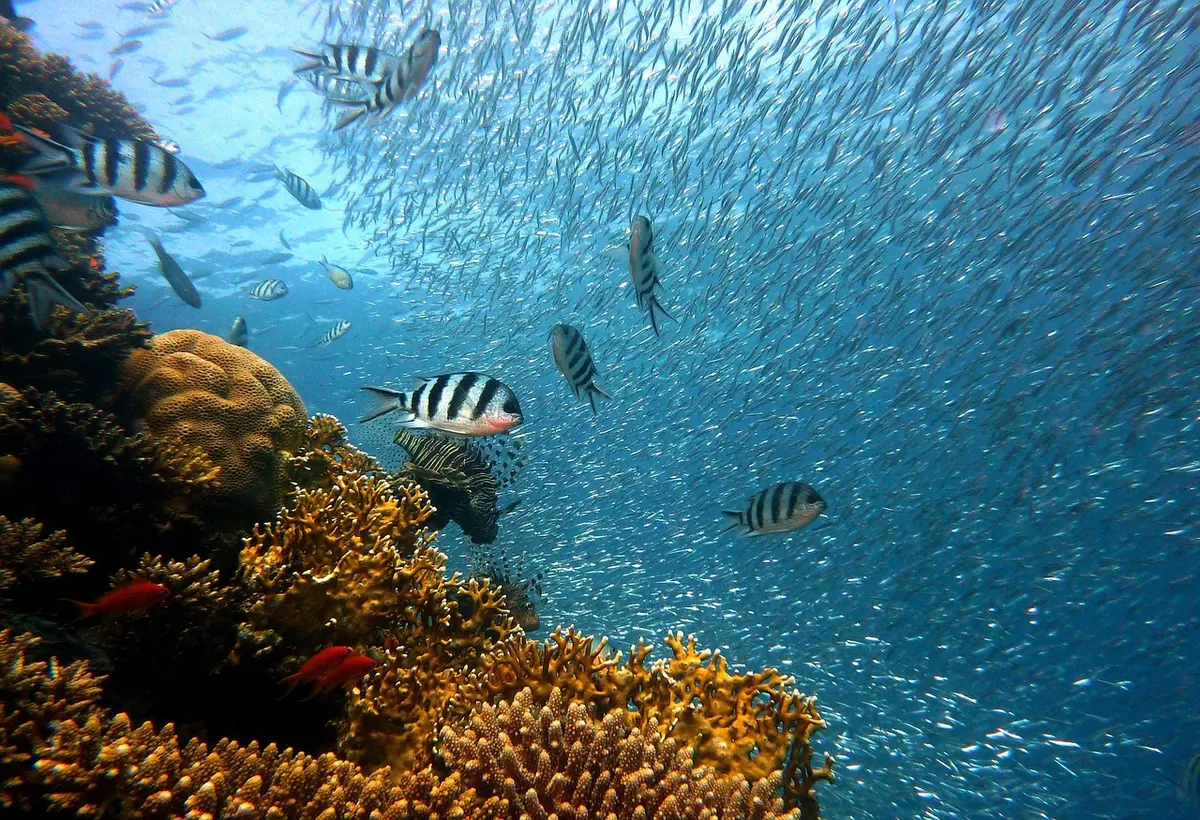
Coral restoration is one of the few corners of conservation where an extra pair of hands genuinely changes the outcome. Fragments get nursed, measured and returned to the reef; transects get swum; algae gets scrubbed off frames. The gap between a well-run project and a photograph of someone holding a piece of coral, though, is wide — and working out which one you're looking at matters more than the badge on your dive card.
What volunteers actually do
Restoration work divides into three stages: nursery, outplanting and monitoring. Volunteers usually get involved in all three, in proportions that depend on the site, the season and how long you're staying.
- Cleaning nursery trees, frames and ropes, and removing algae, sponges and other competitors from around the fragments
- Measuring, photographing and tagging coral fragments so growth and survival can be tracked over time
- Cutting donor colonies into fragments and attaching them to plugs, rope or frames
- Outplanting grown corals onto prepared substrate, often with cement or epoxy putty
- Swimming belt transects and point-intercept surveys, recording substrate, coral cover and disease
- Counting fish, urchins and coral predators such as crown-of-thorns starfish
- Data entry on shore, plus the endless round of rinsing gear, filling tanks and sorting kit
Expect the unglamorous work to fill most of the week. If a project promises you'll be planting coral every single day, ask what happens to the monitoring — and who does it once you've flown home.
Do you need to be a diver?
Not always. Plenty of projects run snorkel surveys, land-based nursery maintenance, education work, boat support, photography and data entry. But if you want to be in the water doing the technical work, a dive qualification is usually the entry ticket.
Most dive-based projects ask for at least Open Water, and many prefer Advanced Open Water or equivalent, because the work involves depth, current, fine control and long bottom times. Some specify a minimum number of logged dives; others will happily take you straight from a course and train you up. Ask before you book, and be honest about your experience. Turning up able to hover motionless a hand's width above the reef is worth more than a folder full of certifications.
Watch the legal side, too. Several countries regulate scientific diving, which means a recreational certification alone may not be enough for survey or restoration work. Some projects run their own training and assessment to satisfy those rules; others require a recognised scientific diving qualification. Check with the project, and with the relevant national diving authority if you're unsure.
On health: expect a diving medical questionnaire, sometimes with a doctor's sign-off. If you have asthma, a heart condition, ear or sinus problems, or you're pregnant, speak to a doctor with diving experience before committing. That isn't a formality — it's the part of the trip you can't undo.
Skills worth building before you go
You don't need to be a marine biologist. You do need to be useful in the water and reliable on land. Three things repay the effort more than anything else.
- Buoyancy and trim. The single most valuable skill on a restoration site. Practise until you can hold position without touching anything.
- Coral identification. Aim for genus-level recognition of the common corals on your target reef, plus the basics of bleaching, disease and algal overgrowth.
- Survey method. Belt transects, point-intercept and quadrats all have conventions. Reef Check and CoralWatch are established programmes that teach survey skills you can carry between projects.
Beyond that: a first aid qualification, ideally one covering remote or marine settings; underwater photography with disciplined labelling and back-up; a logbook you actually keep; and enough patience for community work and long, hot afternoons.
What it costs
There is no standard fee, and anyone quoting a typical figure is guessing. Costs swing wildly depending on the country, the length of stay, and whether you're joining a research station, an NGO, a dive operator or a commercial volunteer company.
- Travel. Flights, internal transfers, and sometimes a shared boat charter to reach the site.
- Project fee. Ask what it covers: accommodation, food, tanks, boat fuel, staff time, training, equipment.
- Training. Dive courses, first aid, and any specialist survey or scientific diving certification.
- Kit. Many projects supply tanks and weights only. Mask, fins, wetsuit, computer and torch may be down to you.
- Insurance. It needs to cover diving explicitly, plus medical evacuation. Standard travel policies often exclude both.
- Extras. Visas, vaccinations, medication, and a contingency fund for cancelled boats and changed flights.
Ask for a written breakdown of where your fee goes. A project that can explain its budget is usually one that keeps records of everything else, too. Cheap isn't automatically good value and expensive isn't automatically rigorous — a small grant-funded project may cost you little and do excellent work, while a glossy operation can charge heavily and monitor almost nothing. For insurance, visas and vaccination requirements, take proper advice: the details vary by country and by policy, and getting them wrong is expensive.
Time commitments
A fortnight is enough to learn the basics and be genuinely useful. A month is better. Three months and you'll likely be trusted with survey data and helping to train newer volunteers. Weekend or one-off days rarely work in this field, because the training investment is front-loaded.
Build slack into any trip. Weather cancels boat days, equipment breaks, and storms don't consult the calendar. Days usually start early, involve a lot of sun, and finish with data entry.
How to spot a project doing genuine work
Restoration has attracted its share of marketing. The difference between a real project and a photo opportunity usually shows up in the answers to four questions.
What permits do you hold? Who are your local partners? What happened to the corals you outplanted last year? How do you know?Photo: joakant / Pixabay